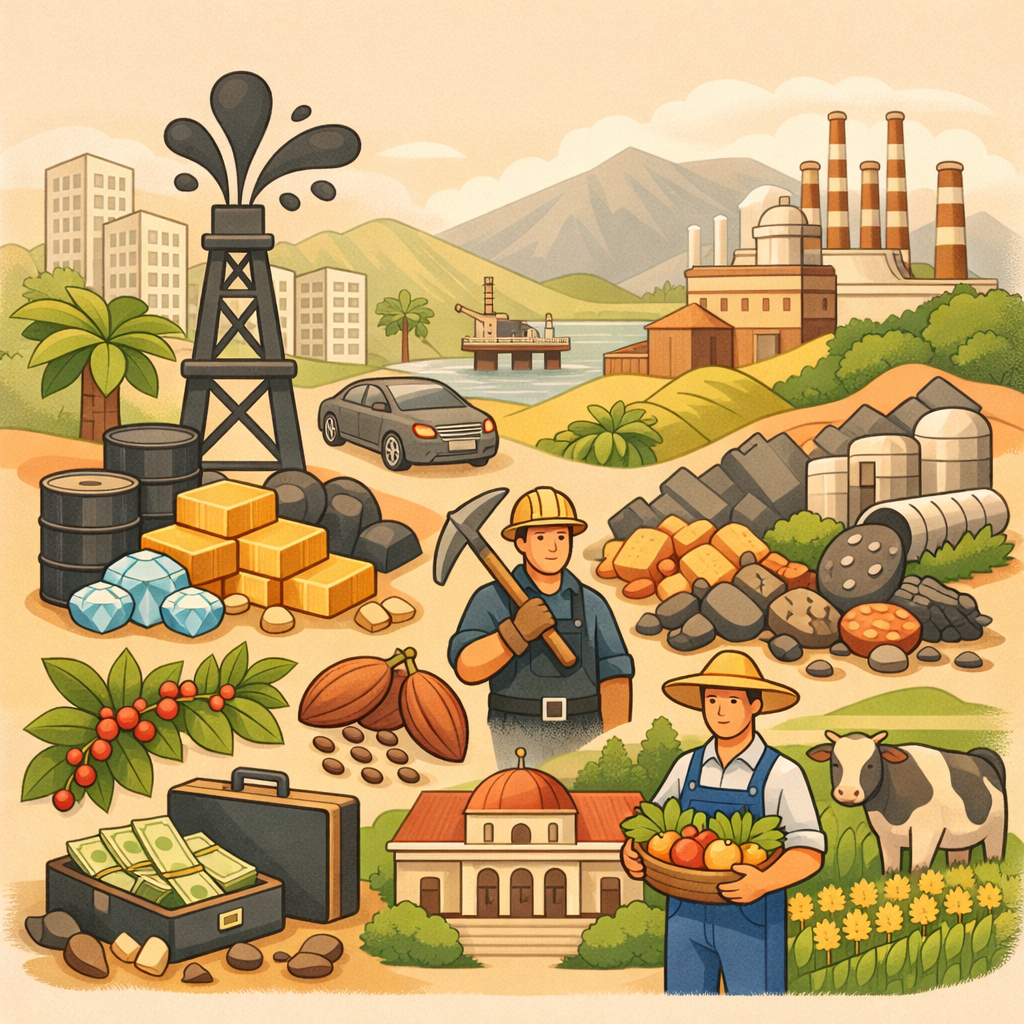
Gold, diamonds, natural gas, iron ore, bauxite, coltan (columbite-tantalite), copper, coal, fertile lands, skilled people, and of course the much-touted oil wealth. Name a resource, and Venezuela seemed to have it all. Yet, despite this rich resource-diversity, Venezuela, which would later define itself as Bolivarian, started relying overwhelmingly on oil for revenue and growth. Over time, dependence on oil reshaped both the economy and the political system, weakening other sectors and concentrating power around oil revenue, long before the country's economic collapse.
From coffee, cocoa to crude
By the late 1920s, Venezuela had become the world's leading oil exporter and the second-largest producer after the United States. Until the discovery of oil at Zumaque-I in April 1914, and the dramatic Barroso-II oil well blowout of 1922 in Cabimas, the economy had relied mainly on coffee and cocoa. The shift was swift and so dramatic, unfolding within a remarkably short time.
By 1926, oil exports had overtaken agricultural exports in value, permanently altering the country's economic structure. Under the rule of Juan Vicente Gómez, the country increasingly financed itself through royalties paid by foreign firms such as Royal Dutch Shell and the Standard Oil Company of New Jersey, rather than through domestic taxation. This shift laid the foundations of a rentier state, in which the government relied on oil royalties to finance imports and public spending rather than domestic production, leading to the gradual neglect of agriculture and industry.
Dutch Disease: When oil weakened the rest of the economy
By the mid-twentieth century, Venezuela had effectively traded its ploughs for oil pumps. Oil revenues reversed the normal social contract: that is, instead of relying on taxes paid by citizens, it financed public spending and subsidies using oil royalties. Accountability weakened as successive governments secured political support through oil-funded fuel subsidies, an expanding public-sector payroll, and large infrastructure projects in Caracas, instead of relying on taxation or institutional performance. Simultaneously, large inflows of foreign currency strengthened the bolívar (Venezuela's currency), making imported goods cheaper than those produced domestically. Result? Agriculture declined, industry struggled to compete, and rural workers moved to cities in search of state-funded employment. These were classic symptoms of what economists would later call Dutch Disease.
In 1936, Venezuelan intellectual Arturo Uslar Pietri coined the phrase Sembrar el Petróleo ("Sow the Oil"), warning that oil wealth had to be converted into a productive agricultural and industrial base before prices fell or reserves ran down. The warning was widely cited but rarely acted upon. In practice, the country found it easier to spend oil income on consumption and large, inefficient public projects than to invest it in long-term productive capacity. The warning went largely unheeded. During oil booms, spending surged; when prices fell, vulnerabilities were exposed, setting the pattern for decades to come.
The "Saudi Venezuela" illusion
The term "Saudi Venezuela" emerged in the 1970s as a shorthand comparison with Saudi Arabia, the world's most prominent oil-rich state. After the 1973 oil shock sent prices soaring, Venezuela's oil revenues surged, allowing the government to spend freely on subsidies, public employment, imports and large infrastructure projects. For a brief period, the country appeared to enjoy the kind of oil-fuelled prosperity associated with Saudi Arabia: high state spending supported by abundant oil income. The label captured not just wealth, but the illusion that oil revenues alone could sustain long-term prosperity.
Following the 1973 Arab oil embargo, global oil prices quadrupled, and Venezuela's revenues surged. The country suddenly appeared limitless in its spending power. Under President Carlos Andrés Pérez, the government launched the ambitious "La Gran Venezuela" (The Great Venezuela) programme. Public-sector employment expanded rapidly, as government and government-owned firms became the main source of formal employment.
Nationalisation of the oil industry
In 1976, Venezuela nationalised both the oil industry, creating Petróleos de Venezuela, S.A. (PDVSA) [Petroleum of Venezuela, Inc] and the iron ore sector, consolidating state control over strategic resources. Flush with oil income and buoyed by strong credit ratings, the government and state-owned companies borrowed heavily from international markets to finance large industrial projects, committing themselves to long-term obligations even during boom years.
Nationalisation made PDVSA the main channel through which oil revenues flowed to the country. The PDVSA company took over operations previously run by foreign firms like Royal Dutch Shell, Gulf Oil, Standard Oil Company of New Jersey etc., through subsidiaries such as Lagoven, Maraven and Llanoven. The profits were increasingly used to finance government spending and borrowing. Over time, governments began directing PDVSA to fund budget shortfalls and non-oil priorities, reducing reinvestment in exploration and maintenance. Oil production stagnated and failed to expand significantly, while public finances became even more dependent on oil income, increasing vulnerability to global price swings.
But wait... Venezuela's problem was not collapse, but structure. Built for booms, the state struggled when prices turned.
Part 2 begins there... Until then, cheers!