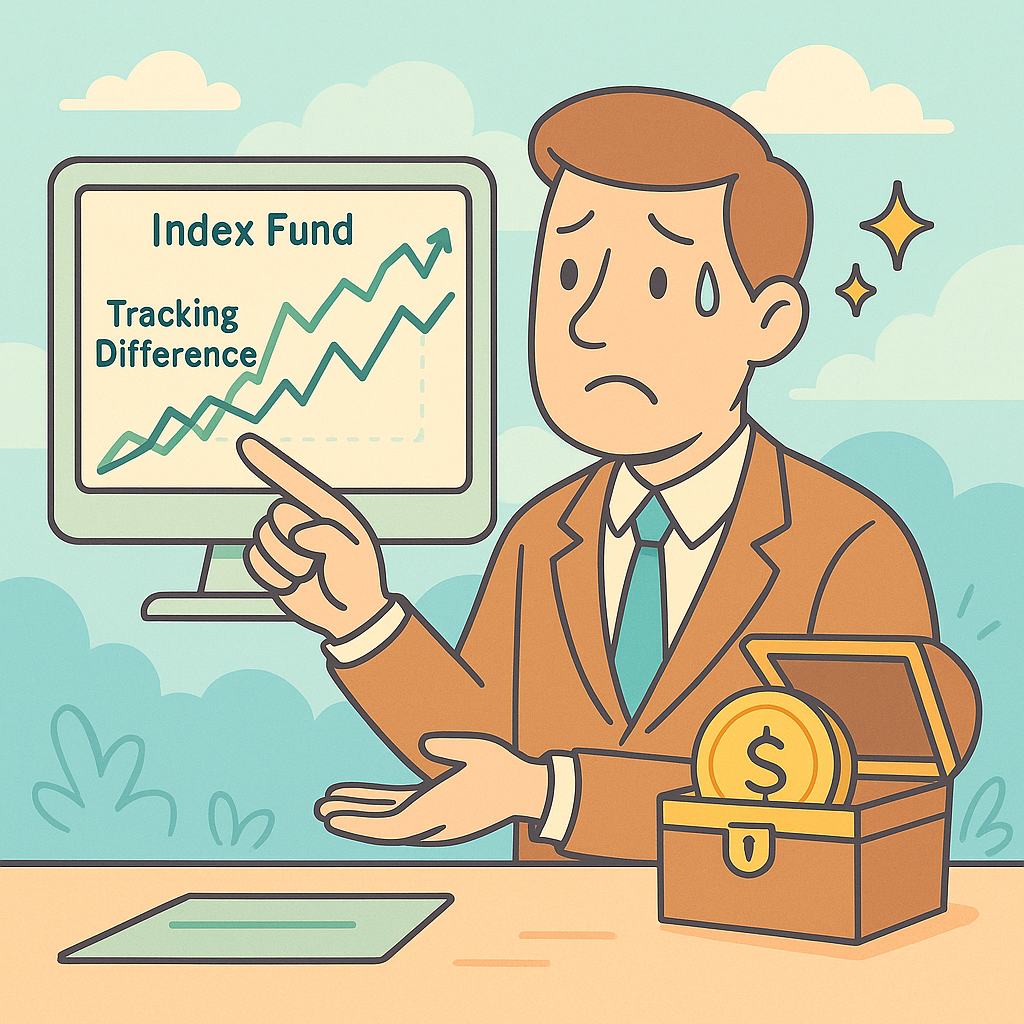
Tracking Difference is the gap between the returns of an index fund and its underlying benchmark. While tracking error measures the consistency of that gap, tracking difference captures the actual shortfall (or excess) the fund delivers over time.
Even if a fund hugs the index daily, expenses, cash holdings, or timing mismatches can nudge its long-term returns a little below or above the benchmark. Those tiny gaps compound quietly, and over a long horizon they can alter the wealth you build.
Consider a Nifty 50 index fund that earns 11% annually while the index clocks 11.4%. The tracking difference is -0.4%. That sliver seems harmless, yet repeating gaps widen over years and chip away at your corpus. Variations during the year—lagging by 0.2% one month, 0.5% the next, and occasionally leading by 0.1%—form the tracking error, the metric that shows how the fund’s returns wiggle around the benchmark along the journey.
In simple terms, tracking difference shows the overall gap between fund and index for a period, whereas tracking error shows how consistently the fund stayed close along the way. Think of tracking difference as a snapshot, and tracking error as the full-motion film.
In India, the Securities and Exchange Board of India (SEBI) expects index funds and ETFs to minimise tracking differences. While SEBI has set explicit upper limits for tracking error, it hasn’t fixed a cap for tracking difference. Fund houses must disclose the numbers regularly so investors can make informed choices.
Causes of Tracking Difference
- Expense ratio, cost of fund: Even low-cost index funds incur management fees, administrative charges, and rebalancing costs that the benchmark does not, nudging fund returns lower.
- Cash holdings or cash drag: Maintaining cash to meet redemptions or pay dividends keeps a slice of the portfolio out of the market, causing a lag during rallies.
- Dividend reinvestment and corporate actions: Delays in reinvesting dividends or adjusting for stock splits, bonuses, and consolidations temporarily distort performance.
- Fund inflows and outflows: Large subscriptions or redemptions can force trades at unfavourable prices, creating short-term divergence from the index.
- Tracking methodology: Full replication versus sampling impacts how closely the fund mirrors the benchmark constituents.
- Rebalancing frequency: Frequent rebalancing keeps alignment tight but increases trading costs; infrequent rebalancing lowers costs but widens gaps.
- Tax treatment and timing mismatches: Differences in fund-level taxation and execution delays during volatile markets can widen the spread between fund and index.
What should investors do?
- Track the difference over one-, three-, and five-year periods. Small annual gaps compound, so focus on multi-year trends.
- Accept short-term wiggles. Month-to-month deviations are normal; prioritise the overall tracking difference.
- Prefer efficient replication and low expense ratios. They typically deliver smaller gaps.
- Review the AMC’s disclosures. SEBI mandates regular publication of tracking difference, so leverage that data.
- Know the difference between tracking error and tracking difference. A fund may show a modest gap yet still fluctuate wildly if its tracking error is high—both matter.
- Remember that tiny, frequent deviations matter over decades. Choose funds that mirror the index closely and consistently.
Mastering tracking difference helps you build a portfolio that truly mirrors the market and supports long-term financial goals.
Cheers! Catch you later with another interesting and informative bullet. Until then...